Best Tips for Choosing a Filter Dryer for Your Compressor?
Choosing a suitable Filter Dryer For Compressor is crucial for efficient operation. A well-chosen filter dryer can significantly enhance the longevity and reliability of your compressor. According to a recent industry report by the Compressor Technology Institute, improper filtration can reduce compressor efficiency by up to 30%. This highlights the importance of making informed choices.
Expert David Chen, a leading authority in compressor technologies, emphasizes, “Selecting the right Filter Dryer For Compressor can prevent costly breakdowns and extend the lifespan of the entire system.” His insights align with the growing demand for quality solutions in the industrial sector. As companies seek better performance, understanding filter dryer specifications becomes essential.
While many manufacturers offer various options, not all products meet industry standards. It's vital to evaluate aspects like pressure drop, moisture removal efficiency, and maintenance needs. Reflecting on personal experiences is equally important, as different applications may reveal unanticipated challenges. The right decisions today could lead to operational efficiency tomorrow.
Understanding the Functionality of Filter Dryers in Compressors
Filter dryers play a crucial role in compressor systems. They help remove moisture and contaminants from the compressed air, protecting downstream equipment. Without a filter dryer, water vapor can condense and lead to corrosion, decreased efficiency, and system failures. Understanding how these devices work is essential for maintaining the longevity of your compressor.
When choosing a filter dryer, consider the types available. There are several designs, including mechanical, refrigerant, and desiccant dryers. Each type has its own advantages and limitations. For instance, mechanical dryers are often cost-effective but may not handle high humidity well. Refrigerant dryers can efficiently cool air but require more maintenance. Desiccant dryers excel in extremely dry air applications, yet they can be expensive to operate.
Evaluate the specific needs of your compressor system. The air pressure, flow rate, and ambient conditions should guide your decision. Regularly monitor the performance of your filter dryer. Signs of inefficiency include increased moisture levels or decreased air quality. A filter dryer is an investment, and proper selection and maintenance directly impact your compressor's effectiveness and lifespan.
Best Tips for Choosing a Filter Dryer for Your Compressor
| Criteria |
Recommendation |
Notes |
| Air Flow Rate |
Select according to compressor specifications |
Ensure compatibility with compressor capacity |
| Filtration Efficiency |
Choose filters with 99.9% efficiency |
Higher efficiency means better protection |
| Moisture Removal Capacity |
Opt for dryers with high moisture removal rates |
Essential for preventing corrosion |
| Temperature Range |
Select based on operational environment |
Consider extremes for efficient operation |
| Maintenance Requirements |
Choose models with easy filter access |
Regular maintenance is key to longevity |
Identifying Your Compressor Type and Requirements
Choosing the right filter dryer starts with understanding your compressor type. Different compressors have varying moisture levels and contaminants. For instance, rotary screw compressors often need dryers capable of handling higher moisture content. On the other hand, reciprocating compressors may require simpler filtration solutions. Knowing these differences is crucial for optimal performance.
Consider the specific requirements of your compressor. Factors such as operating pressure and temperature play significant roles. Evaluate the air quality standards your industry demands. It’s essential to look for filters that meet these standards to ensure compliance and reliability. Sometimes, the ideal solution might not be available. You may need to adjust expectations or explore alternatives.
Be prepared for potential challenges. Selecting the wrong filter dryer can lead to inefficiencies, increased maintenance costs, or even equipment damage. Pay attention to installation and maintenance needs as well. Regular maintenance is vital. A neglected filter can reduce air quality and impact production. Reflect on your choices to ensure you are investing wisely.
Key Features to Consider When Choosing a Filter Dryer
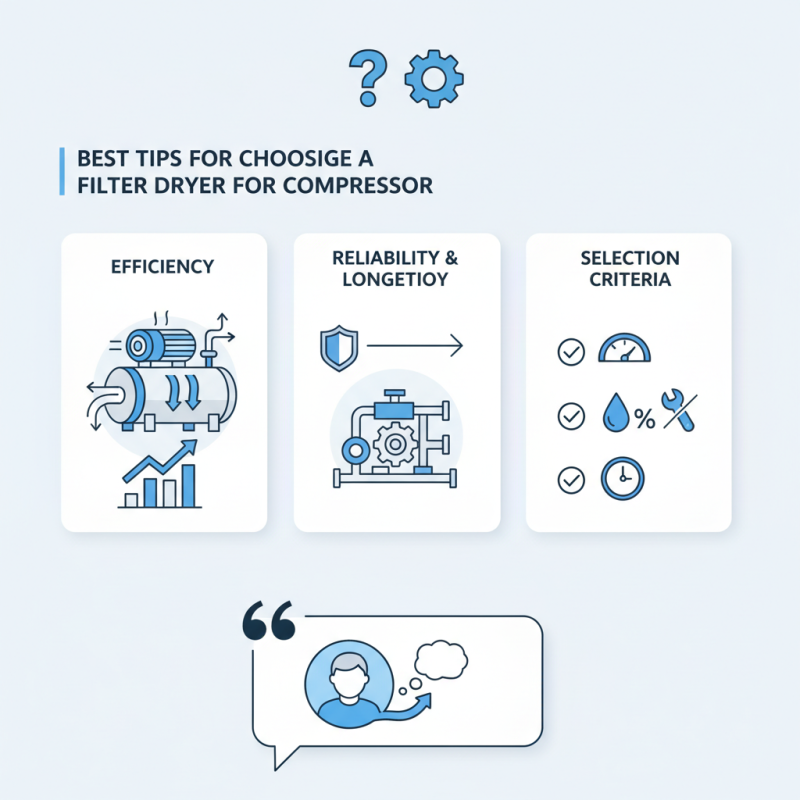
When selecting a filter dryer for your compressor, consider several key features to ensure optimal performance. The efficiency rating is crucial; dryers with a high efficiency can remove moisture effectively, reducing the risk of corrosion and breakdown in your compressed air system. According to industry data, air systems can lose up to 30% of their efficiency due to moisture. A reliable filter dryer can significantly mitigate this issue.
Another important factor is the dryer’s capacity. Oversizing or undersizing can lead to inefficiency. A properly sized dryer will maintain consistent pressure and temperature, providing stable operation. Monitoring tools are also essential; those with integrated sensors can provide real-time data, helping to avoid potential failures. Some systems report unexpected issues, which can lead to unnecessary downtime and increased costs.
Pay attention to maintenance needs. A filter dryer that requires excessive upkeep can be counterproductive. Choose a model that offers easy access for replacement and cleaning. It's not uncommon to find models that promise low maintenance but fail over time. Look for user reviews and industry reports for insights on durability and user experience, especially regarding maintenance challenges.
Evaluating Performance Metrics and Specifications
When selecting a filter dryer for your compressor, evaluating performance metrics is crucial. Start by examining the dryer’s airflow capacity. This metric indicates how efficiently it can handle the compressor's output. A unit with inadequate capacity may lead to moisture retention, risking the equipment's longevity.
Filter efficiency should also be considered. Look for specifications that detail the particle size the filter can capture. Filters that can trap smaller particles enhance the system's reliability. The drying process often encounters challenges, such as fluctuating temperatures and humidity levels. It’s important to review how the dryer adapts to these changes.
While considering these specifications, reflect on the intended application. Different settings may demand varying levels of filtration. A dryer that excels in one condition may underperform in another. Conducting thorough research and asking industry experts can provide insights into potential shortcomings. Trusting specifications is important, but real-world testing is invaluable.