Leave Your Message
China’s Filter Dryer manufacturing sector has become a serious consideration for global process industries. Its suppliers serve pharmaceutical, chemical, food, battery, and specialty-material applications. However, choosing a manufacturer requires more than comparing catalogue prices.
A dependable supplier should demonstrate practical experience with filtration, washing, drying, vacuum control, material selection, and cleanability. It should also explain how its equipment performs under real production conditions. Ask about test records, surface finishes, sealing systems, heating uniformity, discharge design, and after-sales support. Small details matter. A rough weld can complicate cleaning. Uneven heating can extend drying time. Delayed technical support can stop a production line.
Filter Dryer engineer Dr. Jürgen Schmitz states, “A reliable cycle is not the fastest cycle; it is the one operators can repeat.” This principle guides the selection approach used in this article. The following ranking considers engineering capability, manufacturing consistency, customization, documentation, export experience, and customer support.
No ranking is perfect. That limitation matters. A manufacturer suitable for a high-containment pharmaceutical plant may not fit a mineral-processing facility. Buyers should therefore compare technical requirements with actual project evidence. Factory audits, reference checks, material certificates, and acceptance testing remain valuable.
This guide introduces ten Chinese Filter Dryer manufacturers for global buyers. It focuses on practical differences, not impressive claims alone. Some companies may excel in customization. Others may offer stronger standardization or faster delivery. The right choice depends on process conditions, compliance expectations, batch size, and long-term service needs. Careful evaluation still beats a rushed decision.
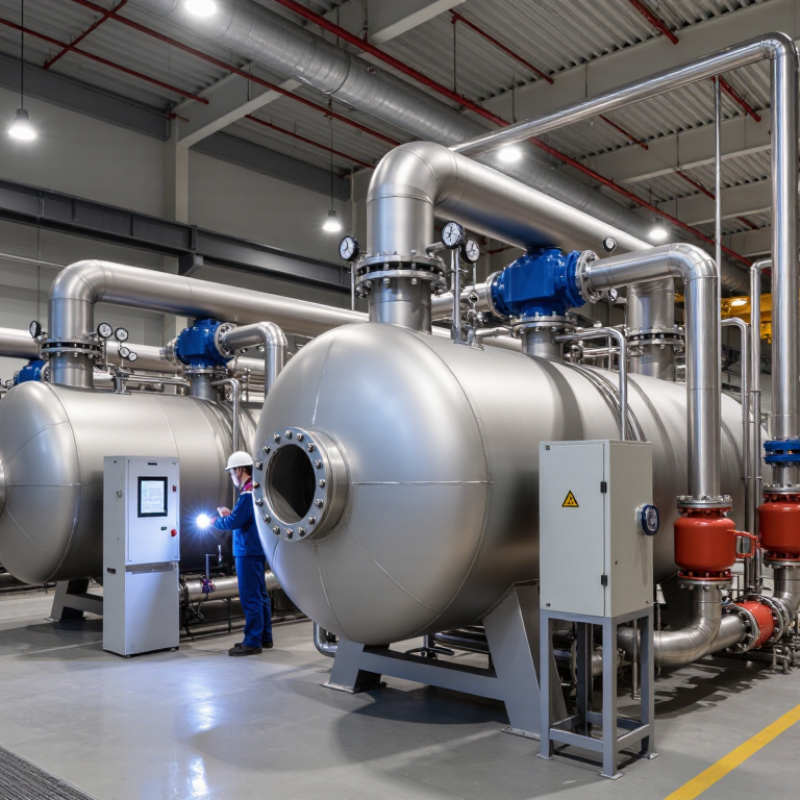
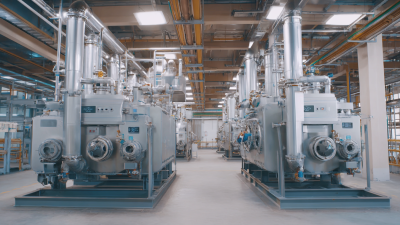
A filter dryer combines solid-liquid separation, washing, and vacuum drying in one enclosed vessel. It reduces transfer steps, protects product quality, and limits operator exposure. In pharmaceutical and fine chemical production, the vessel usually includes a perforated filter plate, agitator, heating jacket, and vacuum connection. Stainless steel surfaces must also support cleanability and corrosion resistance.
China leads much of this manufacturing ecosystem because its chemical, metalworking, machining, and automation supply chains are highly concentrated. Cefic’s Chemicals Industry Profile 2024 reports that China represented about 40% of global chemical sales in 2023. UNIDO’s International Yearbook of Industrial Statistics 2024 also identifies China as the world’s largest manufacturing base by value added. These figures do not prove every Chinese filter dryer is superior. They do explain the strong supplier network, shorter component routes, and competitive engineering costs. Quality can still vary sharply.
Tips: Ask for material certificates, weld records, surface-finish readings, pressure-test evidence, and documented factory acceptance testing. Confirm whether the dryer meets your required GMP, ASME, or local pressure-vessel rules. Request a test using representative solids, because filtration time and cake discharge often change at production scale. A low quotation may hide weak agitation, poor sealing, or limited after-sales support. Inspect the details, not only the polished exterior.
Anonymous buyer-oriented benchmark of common Chinese filter-dryer manufacturing capabilities and product configurations
| Category | Typical Equipment Configuration | Common Working Volume | Typical Filtration Area | Common Operating Range | Suitable Materials | Typical Industries | Key Buyer Verification Points |
|---|---|---|---|---|---|---|---|
| 01 | Laboratory and pilot-scale agitated filter dryer | 5–100 L | 0.05–0.50 m² | Vacuum drying; approximately 20–120°C product temperature | Stainless steel, glass-lined or special alloy contact parts | Process development, pharmaceuticals, fine chemicals | Scale-up methodology, sampling design, agitator control and cleaning validation support |
| 02 | Small production filter dryer with bottom filtration plate | 100–500 L | 0.50–2.00 m² | Vacuum drying; commonly up to 150°C, subject to sealing and material limits | 316L stainless steel and corrosion-resistant alloys | Active pharmaceutical ingredients, specialty chemicals | Filter plate flatness, cake discharge reliability, dead-leg minimization and surface finish |
| 03 | Medium-capacity pharmaceutical agitated filter dryer | 500–1,500 L | 2.00–6.00 m² | Typical vacuum range: 1–100 mbar absolute, depending on the drying system | 316L stainless steel; electropolished contact surfaces are commonly specified | Pharmaceuticals, antibiotics, high-value intermediates | GMP documentation, cleanability, containment, torque monitoring and batch reproducibility |
| 04 | Large-volume pharmaceutical filter dryer | 1,500–5,000 L | 6.00–20.00 m² | Controlled vacuum drying with heated shell, base or agitator | 316L stainless steel, nickel alloys or other corrosion-resistant materials | Large-scale API and regulated chemical production | Uniform heat transfer, agitator load capacity, containment performance and validation package |
| 05 | High-containment filter dryer for toxic or potent materials | 100–2,000 L | 0.50–8.00 m² | Closed operation under vacuum or inert-gas conditions | 316L stainless steel with mechanically polished or electropolished surfaces | Potent APIs, pesticides, cytotoxic compounds and hazardous chemicals | Glovebox or split-valve interface, dust-tight discharge, leak testing and operator exposure controls |
| 06 | Explosion-protected filter dryer for flammable solvents | 300–3,000 L | 1.50–12.00 m² | Inert-gas operation; pressure and temperature selected through process risk assessment | Conductive stainless steel and certified electrical components | Solvent-based pharmaceuticals, dyes, resins and fine chemicals | Hazardous-area classification, grounding, oxygen monitoring, inerting and pressure-relief design |
| 07 | Glass-lined or corrosion-resistant filter dryer | 100–2,500 L | 0.50–10.00 m² | Moderate-temperature vacuum drying for corrosive process streams | Glass-lined vessel, PTFE components or nickel-based alloys, depending on chemistry | Agrochemicals, fluorochemicals, pigments and corrosive intermediates | Chemical compatibility, lining inspection, spark testing and protection against mechanical impact |
| 08 | Continuous or semi-continuous filtration and drying system | Process-dependent; commonly 50–500 kg/h solids throughput | Designed by throughput rather than vessel volume | Continuous feed, filtration, washing and drying in a controlled sequence | Stainless steel or alloy contact parts selected for the process chemistry | Bulk chemicals, inorganic salts, catalysts and high-throughput materials | Residence-time control, steady-state operation, automated solids transfer and maintenance access |
| 09 | Customized filter dryer for heat-sensitive products | 100–2,000 L | 0.50–8.00 m² | Low-temperature vacuum drying, often below 80°C product temperature | 316L stainless steel, polished alloys and low-shear product-contact components | Biotechnology, nutraceuticals, specialty APIs and temperature-sensitive chemicals | Heat-transfer uniformity, residence-time control, gentle agitation and moisture endpoint testing |
| 10 | Turnkey filter-dryer system with automation and utilities | 500–5,000 L | 2.00–20.00 m² | Integrated filtration, washing, drying, discharge and automated recipe control | 316L stainless steel or project-specific alloys and linings | Pharmaceutical, chemical, food-ingredient and international EPC projects | FAT and SAT scope, PLC/SCADA integration, documentation, spare parts and after-sales service |
A filter dryer combines solid-liquid separation, cake washing, agitation and vacuum drying in one enclosed vessel. The numerical values above are typical engineering ranges used for preliminary buyer comparison; final specifications must be confirmed through process testing, material-compatibility review, pressure-vessel design and applicable local regulations.