How to Choose the Right Filter Drier for Your HVAC System?
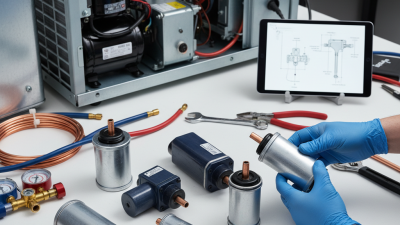
Choosing the right filter drier for your HVAC system can be challenging. Many factors influence this important decision. The filter drier plays a crucial role in ensuring system efficiency. It removes moisture and contaminants from refrigerants, which protects the compressor and prolongs the system's lifespan.
When selecting a filter drier, consider specific system requirements. Different HVAC systems have unique needs, and the right filter drier can vary. Some filter driers are designed for high-capacity systems, while others are made for smaller applications. Be aware of the manufacturer's specifications, as they provide essential guidance.
Additionally, not all filter driers are created equal. The materials used in construction, and compatibility with refrigerants, can impact performance. Researching expert opinions and product reviews can offer valuable insight. Mistakes in this choice can lead to inefficiency and costly repairs. Take the time to analyze your options carefully. Investing in the right filter drier will enhance your HVAC system's reliability and performance.
Understanding the Role of Filter Drier in HVAC Systems
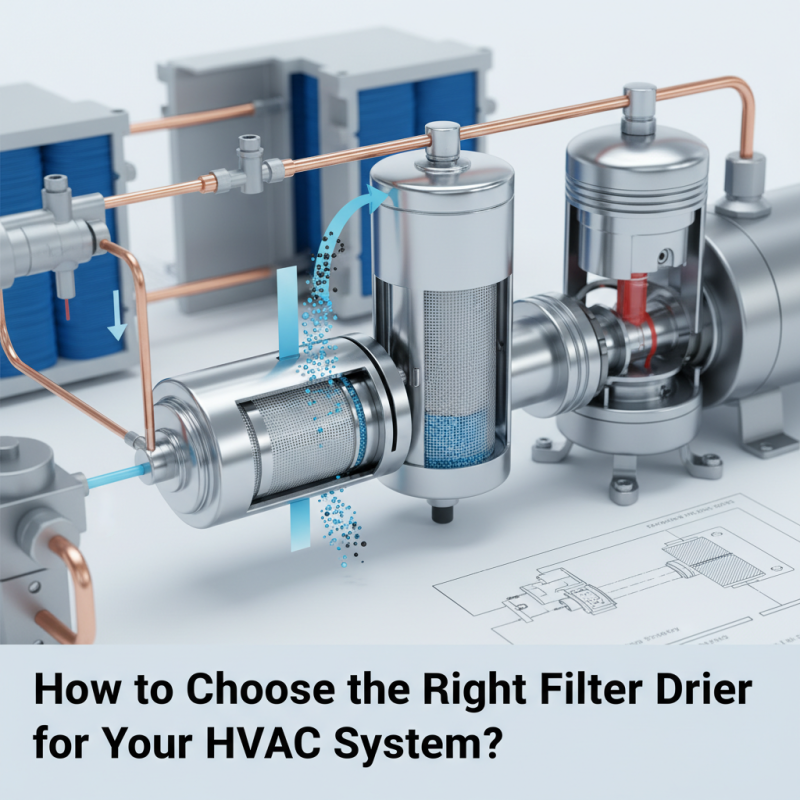
In HVAC systems, the filter drier plays a crucial role in maintaining efficiency. It helps to remove moisture and contaminants from the refrigerant. Moisture in the system can cause corrosion, leading to expensive repairs. A filter drier not only protects the compressor but also improves overall system performance.
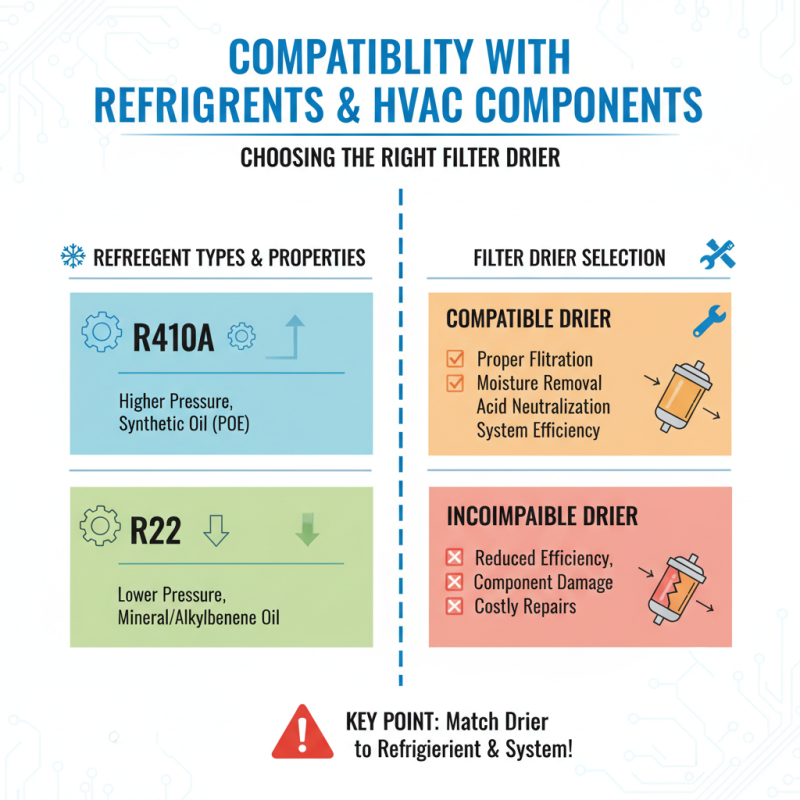
Choosing the right filter drier involves understanding your specific HVAC system. Each system has unique requirements based on its design and location. For instance, an industrial setup may require a different type compared to residential systems. It is essential to consider the refrigerant type as well. Not every filter drier is compatible with all refrigerants.
Regular maintenance is key to ensuring the filter drier functions effectively. Skipping this can result in reduced system efficiency and increased energy costs. Sometimes, people overlook the importance of timing when replacing filter driers. This can lead to prolonged issues. Understanding how a filter drier contributes to system longevity is vital. Every choice counts in maintaining a reliable HVAC system.
Understanding the Role of Filter Drier in HVAC Systems
Types of Filter Driers and Their Applications
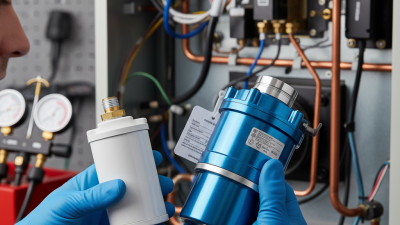
When selecting a filter drier for your HVAC system, it helps to understand the types available and their specific applications. There are primarily two types: liquid line filter driers and suction line filter driers. Liquid line driers are designed to remove moisture and particulates from refrigerant before it reaches the expansion device. This prevents issues like ice formation and equipment damage. They are critical in residential and commercial systems.
Suction line filter driers, on the other hand, are placed on the low-pressure side of the system. They protect the compressor by filtering contaminants. These driers are valuable in systems that operate under varying loads, as they can capture debris that accumulates during cycling. Proper sizing is crucial. An oversized drier can hinder performance, while an undersized one may fail to remove enough moisture. Therefore, choosing the right type involves careful consideration of system loads and potential contaminants.
Not every HVAC system is the same. While many opt for standard models, some may need specialized options depending on the environment. Installing the wrong filter drier can lead to inefficiency. Techs often overlook this aspect, leading to problems later on. Always gather information about your specific requirements before making a decision. Exploring options and understanding their relevance can seem daunting, but it's essential for system longevity.
Key Factors to Consider When Choosing a Filter Drier
Choosing the right filter drier for your HVAC system is crucial for optimal performance. There are several key factors to consider. Start with the type of refrigerant your system uses. Different refrigerants can affect how the filter drier operates. Understanding your system's requirements is vital for selecting the correct drier.
Another important factor is the flow rate. A filter drier needs to match the system's flow to ensure efficiency. If the flow rate is too low, it may not filter effectively. If too high, it may cause damage. Regularly check if the drier is working efficiently.
**Tips:** Pay attention to moisture levels in your refrigerant. Excess moisture can lead to system failures. Monitor performance over time; it helps identify issues early.
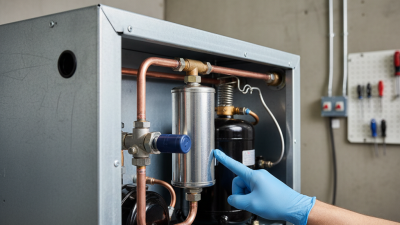
Lastly, consider the size and compatibility of the filter drier with your HVAC unit. Sometimes, the perfect drier might not fit your system seamlessly. It’s worth consulting with a professional for advice on your specific setup. Even small mistakes in selection can lead to bigger problems later. Evaluate all these factors carefully.
How to Choose the Right Filter Drier for Your HVAC System? - Key Factors to Consider When Choosing a Filter Drier
| Factor |
Description |
Considerations |
Recommendation |
| Size |
Determine the correct size based on system capacity and refrigerant type. |
Check manufacturer's specifications and compatibility. |
Opt for standard sizes used in your HVAC system. |
| Type |
Select between liquid line, suction line, or bi-flow filter driers. |
Understand the flow direction of your system. |
Choose the type that aligns with your HVAC configuration. |
| Moisture Removal Capacity |
Assess the ability of the drier to remove moisture from the refrigerant. |
Consider the climate and average humidity levels. |
Select a drier with adequate moisture absorption ratings. |
| Material |
Know the construction materials that prevent corrosion and damage. |
Evaluate operating pressure and temperature conditions. |
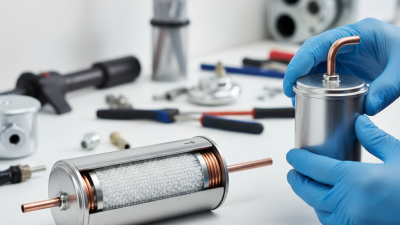
Choose materials such as aluminum or steel depending on the application. |
| Filtration Efficiency |
Check the micron rating that indicates particle removal efficiency. |
Determine the contaminants prevalent in the system. |
Select a filter with a low micron rating for better efficiency. |
Maintenance Tips for Optimal Filter Drier Performance
Proper maintenance of filter driers is crucial for HVAC systems. These devices prevent moisture and contaminants from entering the refrigeration circuit. According to industry reports, a well-maintained filter drier can improve system efficiency by up to 15%. Regular checks are essential. Inspecting the drier for signs of clogging can help in early detection of problems.
Changing the filter drier annually is a common practice. However, the ideal frequency may vary based on usage and environmental conditions. Some experts suggest monitoring system pressure. If the pressure rises significantly, it may indicate a saturated filter drier. Another consideration is temperature fluctuations. Inconsistent temperatures can cause additional strain on the drier.
Using a torque wrench when replacing components is important. Incorrectly installed parts can lead to leaks and system failures. It’s also beneficial to keep a log of maintenance activities. Documenting maintenance helps identify patterns and potential recurring issues. HVAC professionals often recommend benchmarking performance data. This tracking can provide insights into the longevity and reliability of the filter drier in the system.