Leave Your Message

How to Choose the Right Liquid Line Filter Drier for Your System?

Choosing the right Liquid Line Filter Drier for your system is crucial for optimal performance. Renowned HVAC expert David Johnson once stated, “The right filter drier can make or break your system’s efficiency.” This highlights the importance of making an informed choice.

Liquid Line Filter Driers serve as critical components. They not only remove moisture but also filter out contaminants that could damage your system. Selecting the correct model requires understanding your system's specific needs, including refrigerant type and system capacity. A mismatch could lead to inefficiencies and costly repairs.

When evaluating options, consider the quality of the construction and the manufacturer’s reputation. Poor choices can result in premature failures and unnecessary downtime. Always seek products backed by proven expertise and reliable performance metrics. In the ever-evolving HVAC landscape, staying informed can significantly impact your system’s longevity.
How to Choose the Right Liquid Line Filter Drier for Your System?

Understanding the Role of Liquid Line Filter Driers in HVAC Systems

Liquid line filter driers play a crucial role in HVAC systems. They help maintain system efficiency by removing contaminants and moisture from the refrigerant. Contaminants can cause damage, leading to costly repairs. A quality filter drier ensures clean refrigerant circulation, which is vital for optimal performance.

When selecting a filter drier, consider the system’s size and type. Not all filter driers are suitable for every system. It is essential to match the capacity of the filter drier with your HVAC system’s requirements. Choosing the wrong size may lead to inefficient filtration. Moisture can still enter the system if the filter is too large or small.

Regular maintenance is critical for the filter drier's effectiveness. Inspect it periodically to ensure it is functioning well. An ineffective filter drier can allow contaminants to accumulate. This may lead to system failures or decreased efficiency. Always take the time to reflect on your choices regarding maintenance and replacement. Careful consideration today can save significant costs in the future.

How to Choose the Right Liquid Line Filter Drier for Your System?

Filter Drier Type Refrigerant Compatibility Recommended Flow Rate (GPM) Connection Size (inches) Max Operating Pressure (psi)
Copper Core R-410A, R-22 2.5 3/8 500
Aluminum Core R-134A, R-407C 3.0 1/2 450
Bi-flow Filter Drier R-22, R-410A 4.0 5/8 600
Suction Line Filter Drier R-404A, R-507A 2.0 3/8 500

Identifying Key Specifications for Choosing a Filter Drier

Choosing the right liquid line filter drier is crucial for efficient HVAC systems. The key specifications to consider include the refrigerant type, system size, and moisture removal capacity. A study from the Air Conditioning Heating and Refrigeration Institute indicates that moisture can lead to substantial system failures, costing operators thousands in repairs.

Refrigerant type determines the filter drier material required. Some systems use R-410A, while others may use R-22. Each refrigerant has unique properties. For instance, R-22 requires different materials to prevent acid formation. Not using the right drier compromises system performance and longevity.

Additionally, consider the system's size. The filter drier must match the flow rate and capacity of the refrigeration cycle. Inadequate sizing can lead to increased pressure drop or insufficient moisture removal. Reports indicate that a properly sized filter drier can reduce maintenance costs by up to 30%. Thus, it’s essential to assess these specifications carefully to avoid operational risks and enhance efficiency. Always remember that even minor miscalculations can lead to significant long-term issues in system performance.

Comparing Different Types of Liquid Line Filter Driers

Choosing the right liquid line filter drier is essential for system efficiency. Many options exist, each with unique characteristics. Among the most common types are the bi-directional, traditional, and core filter driers. Each type impacts performance, pressure drop, and overall refrigerant flow.

Bi-directional filter driers are versatile. They allow refrigerant flow in both directions. They are effective for heat pump applications but may not handle high moisture loads well. According to industry reports, traditional filter driers typically perform best in systems with low moisture levels. Their solid design ensures minimal pressure drop, promoting efficient system operation.

Core filter driers offer even more benefits. They utilize a desiccant material that absorbs moisture and contaminants. While efficient, they require regular maintenance checks. A report by the Air Conditioning Contractors of America emphasizes that regular maintenance keeps these systems running smoothly.

Tips: Ensure compatibility with your refrigerant type. Inspect the drier regularly for optimal performance. Always consider the environmental conditions of your system. Small oversights can lead to larger operational issues. Make informed choices based on accurate data.

Evaluating Compatibility with Your Refrigerant and System Design

How to Choose the Right Liquid Line Filter Drier for Your System?

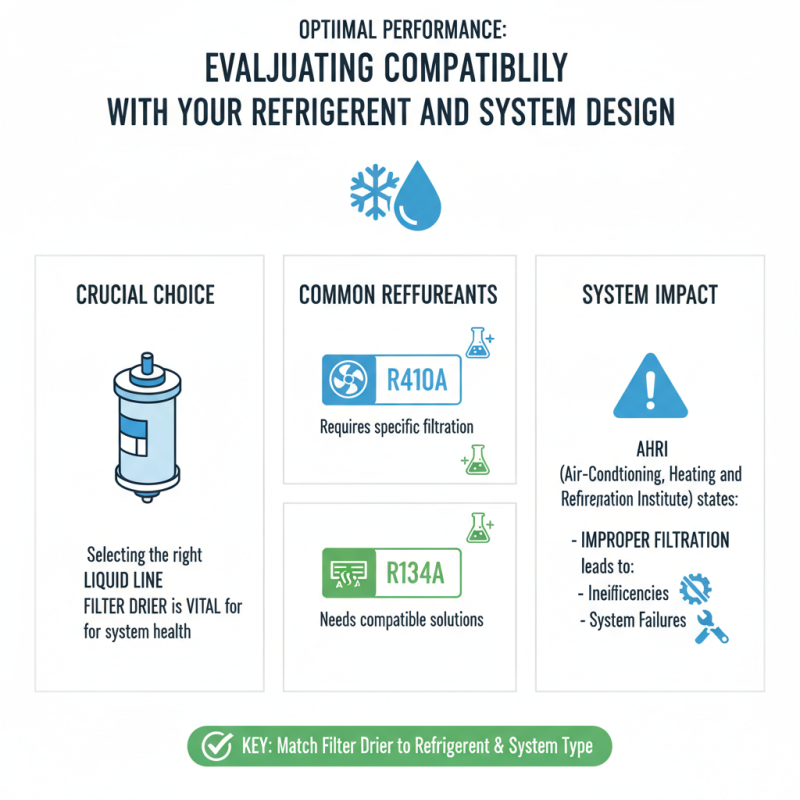
When selecting a liquid line filter drier, compatibility with your refrigerant and system design is crucial. Many systems utilize refrigerants like R410A or R134A, which require specific filtration solutions to operate effectively. According to the Air-Conditioning, Heating, and Refrigeration Institute (AHRI), improper filtration can lead to system inefficiencies and even failures.

It's essential to check the specifications of your chosen filter drier. Some models are designed for high moisture capacities, which is vital for R410A systems due to their thermal properties. For example, high moisture can cause acid formation, leading to corrosion in the compressor. The ability of the filter drier to handle specific contaminants also matters. A study by the Institute of Refrigeration emphasizes that a well-chosen filter drier can prevent a significant amount of debris from circulating, thereby enhancing system longevity.

Not all filter driers are universal, and not every system can handle the same type of filtration elements. Some may require certain desiccants or sizes. Choosing incorrectly could mean a loss in efficiency and increased operational costs. Always consider the specific needs of your refrigerant type and the design of your cooling system. A mismatch could result in poor performance or damage down the line.

Installation and Maintenance Tips for Liquid Line Filter Driers

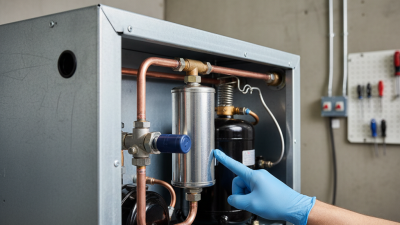
When installing a liquid line filter drier, proper placement is crucial. Ideally, it should be near the compressor. This location minimizes refrigerant contamination. It also ensures efficient moisture removal. Follow the manufacturer's guidelines for installation. Incorrect alignment can lead to system inefficiencies.

Regular maintenance is essential for optimal performance. Experts suggest replacing filter driers every five years. This timeframe helps prevent system breakdowns caused by accumulated moisture. Notably, a moisture level above 100 parts per million can seriously compromise the system. Forgotten maintenance can lead to reduced efficiency and increased energy costs.

Monitoring pressure differential across the filter drier is a reliable maintenance practice. A difference greater than 10 psi may indicate a blockage. It’s important to check for signs of wear and tear. Regular inspections can prevent costly repairs down the line. Understanding these maintenance aspects can enhance your system's longevity.