How to Choose the Best Filter Dryer for Your Compressor?
Choosing the right filter dryer for your compressor can significantly impact its performance. According to John Smith, a leading expert in the HVAC industry, "A well-chosen filter dryer can extend the life of your compressor dramatically." His expertise highlights the importance of understanding the specific needs of your compressor system.
Many factors influence the decision-making process. For instance, the type of refrigerant used plays a crucial role. Additionally, the operating conditions of the compressor must be considered. Selecting an inappropriate filter dryer can lead to reduced efficiency and increased maintenance costs.
However, making the right choice is not always straightforward. There are multiple brands and models available, each with unique features. It's important to research and compare options carefully. Engaging with professionals may help, but it’s also wise to reflect on your own operational requirements. A suitable filter dryer for your compressor enhances its performance and longevity.
Understanding the Role of Filter Dryers in Compressor Systems
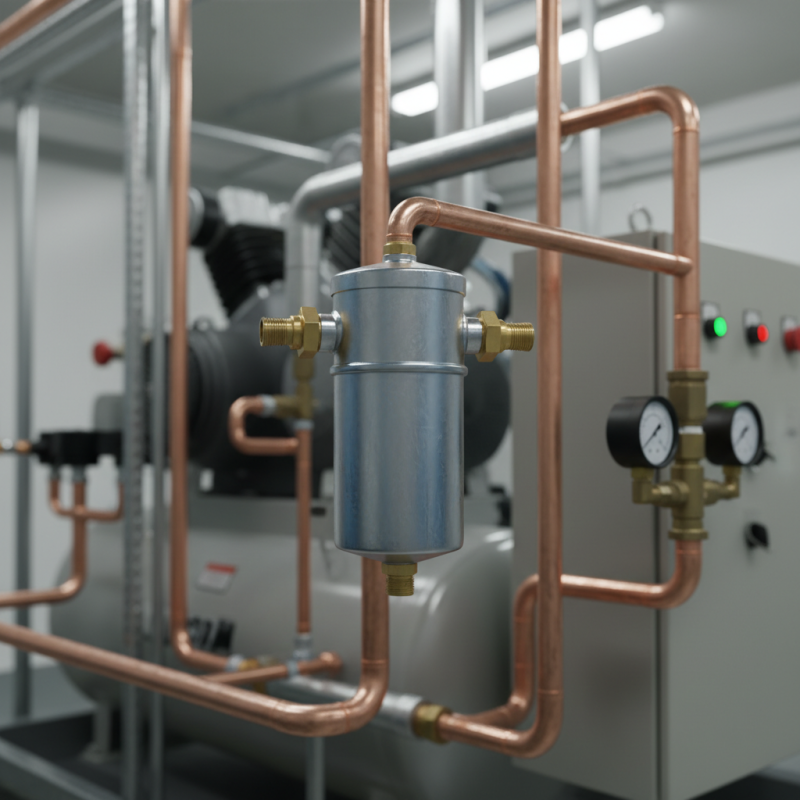
Filter dryers play a crucial role in compressor systems. They remove moisture and contaminants from the compressed air. Excess moisture can lead to corrosion and wear in various components. By maintaining clear air pathways, filter dryers enhance the efficiency of compressors.
Choose filter dryers based on your system's needs. Consider factors like flow rate and operating pressure. Not all systems require the same specifications. Some may need higher filtration levels. Others might focus on specific contaminants. Understand the unique demands of your setup to select effectively.
Despite their importance, many overlook the potential maintenance issues. Regular checks are crucial to ensure optimal function. A clogged filter can lead to performance drops. Be prepared for periodic replacements. This is a small effort compared to the risk of major system failures. Remember, the right choice today can prevent future headaches.
How to Choose the Best Filter Dryer for Your Compressor?
| Filter Dryer Type |
Application |
Max Operating Pressure (bar) |
Max Temperature (°C) |
Filter Size (microns) |
Efficiency |
| Coalescing Filter Dryer |
Air and Gas Processing |
10 |
70 |
1 |
99.9% |
| Desiccant Dryer |
Humidity Control |
12 |
80 |
0.01 |
99.99% |
| Membrane Dryer |
Natural Gas Processing |
15 |
90 |
0.1 |
98% |
| Cyclone Separator |
Particle Removal |
8 |
60 |
5 |
95% |
Key Features to Consider When Choosing a Filter Dryer
Choosing the right filter dryer for your compressor is crucial. Understanding key features can
significantly improve performance and reliability. Look for a filter dryer that meets your specific needs.
Consider the size of your compressor and the typical operating conditions. The dryer should handle moisture
and contaminants effectively.
One important feature is the maximum operating pressure. Ensure the filter dryer can handle your compressor’s capacity.
Additionally, check for a low pressure drop. A higher pressure drop can decrease efficiency. Pay attention
to the filtration media as well. Quality media will trap contaminants better and last longer.
Tips: Regular maintenance is essential. Replace the
filter dryer according to manufacturer guidelines. This helps prevent system failures. Training your team
on proper installation and monitoring is also beneficial. Stay informed about industry updates. This
knowledge can guide your future filter dryer choices.
Types of Filter Dryers and Their Applications in Compressors
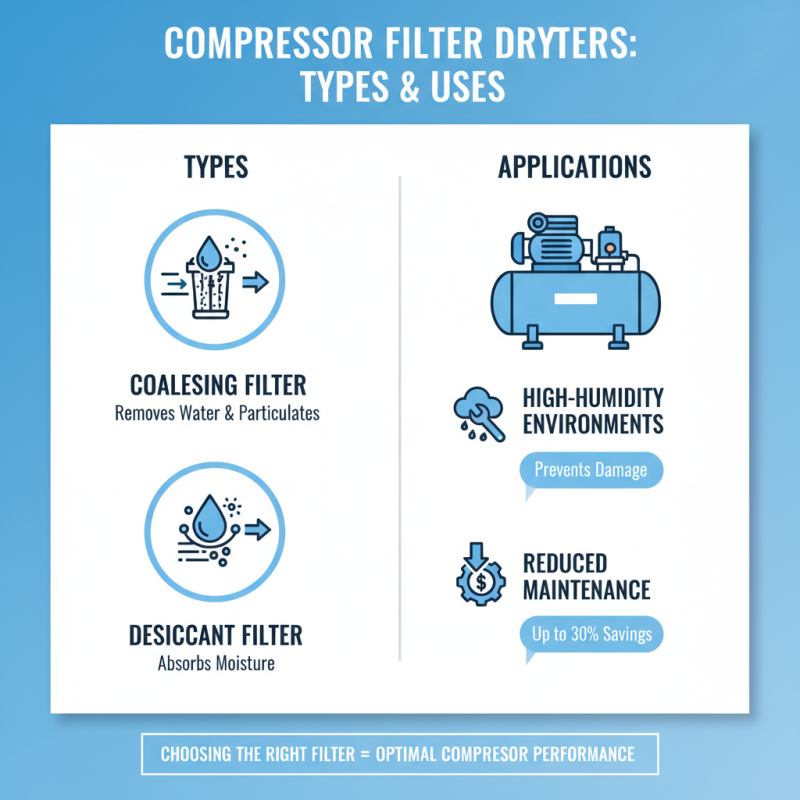
In the world of compressors, choosing the right filter dryer is crucial. Various types of filter dryers serve distinct purposes. For instance, a coalescing filter dryer effectively removes water and particulates. This type is particularly valuable in high-humidity environments where moisture can damage compressor components. Industry reports suggest that installing a coalescing filter can reduce maintenance costs by up to 30%.
Another common option is the desiccant filter dryer. It's beneficial in applications where moisture levels need strict control, such as food processing or pharmaceuticals. Data from recent studies indicate that desiccant dryers can achieve dew points below -40°F. However, they require regular maintenance and replacement of desiccant material. This is an essential consideration, as neglect can lead to system inefficiencies.
There are also membrane filter dryers. These are relatively newer but growing in popularity. They separate moisture from air using semi-permeable membranes. This method is less energy-intensive, making it attractive for green initiatives. Yet, they may not be suitable for all compressor types. Understanding the specific needs of your application will guide you to the best filter dryer choice.
Factors Affecting Filter Dryer Efficiency and Performance
When selecting a filter dryer for your compressor, several factors impact efficiency and performance. One major aspect is the size of the filter.
If it’s too small, it may not adequately remove moisture. A larger filter can capture more contaminants. However, oversized filters can lead to higher pressure drops.
Balancing size with your system’s requirements is essential.
Another crucial factor is the type of desiccant used in the dryer. Some desiccants absorb moisture better than others. Be aware of the specific operational conditions.
High humidity environments need more efficient desiccants. Regularly checking and replacing the desiccant ensures optimal performance.
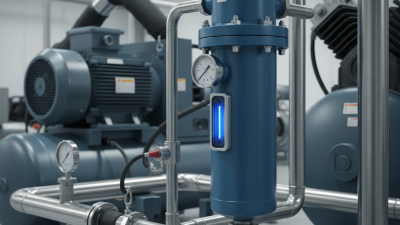
Tips: Consider installing a pressure gauge. Monitoring pressure drops can alert you to potential filter failures. Regular maintenance can save money and improve performance.
Contemplate the placement of your dryer too. Units far from the compressor might reduce efficiency. Look into the layout of your system.
Evaluate the conditions in which the filter dryer operates. A mismatch can lead to inefficiencies. Regular audits can reveal performance issues.
Don't assume every model fits every application. Take time to assess these factors carefully. This prevents costly mistakes and enhances system reliability.
Maintenance Tips for Prolonging the Life of Your Filter Dryer
Maintaining your filter dryer is crucial for optimal performance. A well-maintained filter dryer can increase the efficiency of your compressor by an impressive 15%, according to industry studies. Regular maintenance ensures longevity and prevents costly downtimes. Simple tasks, such as regularly checking for leaks and replacing filters, can make a difference.
The desiccant material inside the filter dryer can lose effectiveness over time. Studies reveal that neglecting this can lead to a moisture increase of up to 40% in the compressed air system. It's advisable to inspect the desiccant at least every six months. When moisture accumulates, it can cause corrosion and damage to the compressor and pneumatic components.
Temperature control is another vital aspect. Filter dryers often perform best within a specific temperature range. Running outside of this range can reduce their lifespan considerably. Furthermore, ensure that your dryer is clean and free from blockages. Failure to address such issues can lead to reduced airflow, ultimately raising energy costs by 10-15%. Regular maintenance is not just about extending life; it’s about creating a reliable work environment.