How to Choose the Right Copper Accumulator for Your Needs?
Choosing the right copper accumulator can be a daunting task. With various options available, recognizing your specific needs is essential. Copper accumulators play a critical role in various systems, especially in hydraulic applications. Their efficiency can significantly influence the performance of equipment.
Understanding the different types of copper accumulators is vital. Each type offers distinct advantages and disadvantages. For instance, some may provide better energy absorption, while others excel in durability. Think about the environment in which you will use the accumulator. Temperature and pressure variations can impact performance. Always consult with a knowledgeable source or expert for guidance tailored to your situation.
Ultimately, selecting a copper accumulator involves not only evaluating technical specifications but also reflecting on your particular use case. Consider your past experiences and any challenges faced. This reflection can lead to better decision-making and help you choose the most suitable accumulator for your needs.
Understanding Different Types of Copper Accumulators Available in the Market
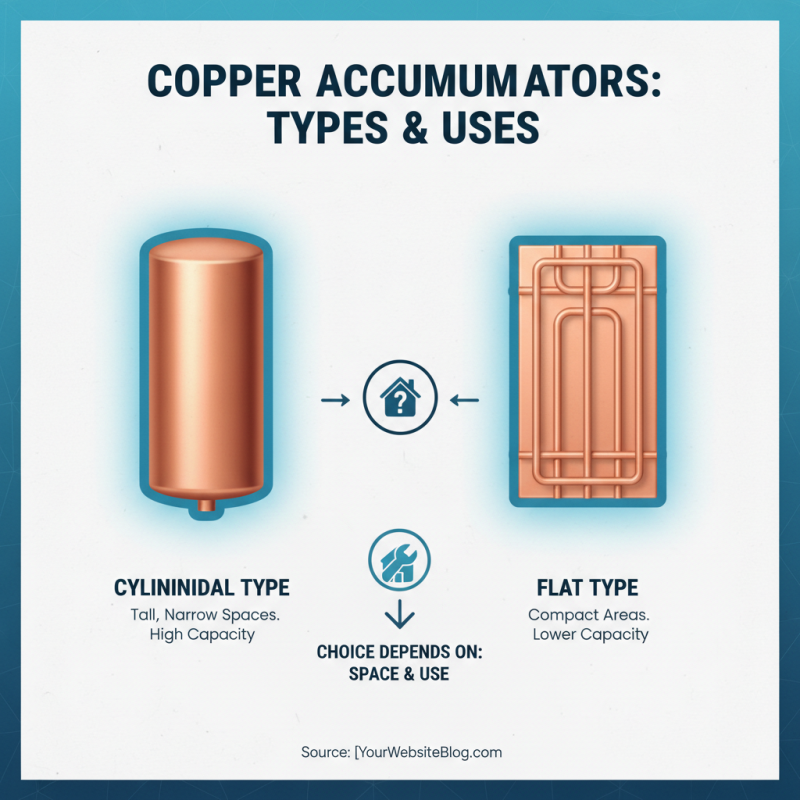
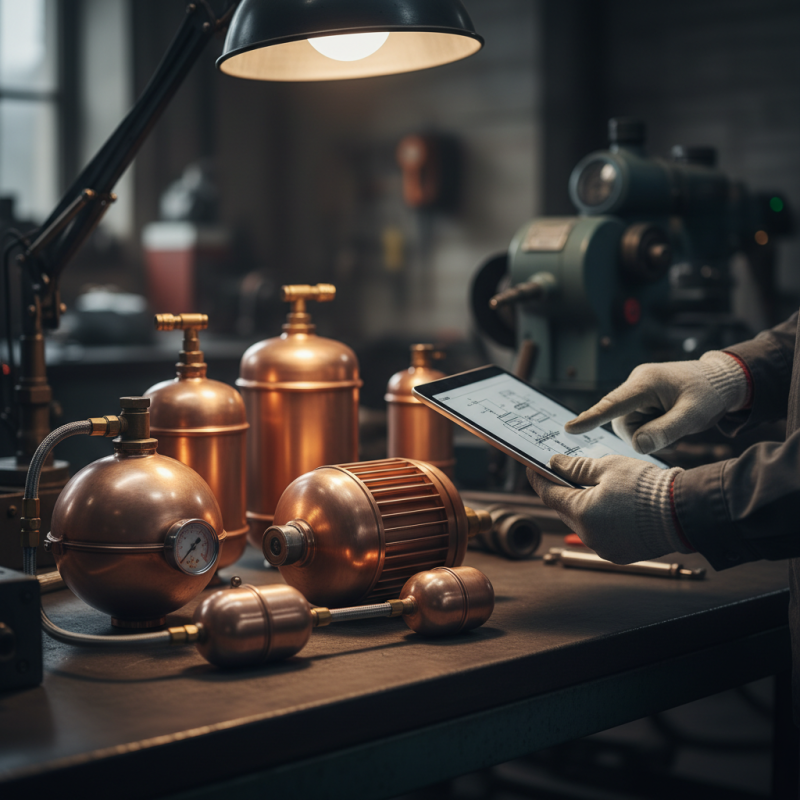
When choosing a copper accumulator, understanding the different types is essential. Copper accumulators vary in design and capacity. Some are cylindrical, while others are flat. The choice often depends on the space available and the intended use. Smaller accumulators work well in compact spaces, while larger ones can store more energy for bigger projects.
The market offers two main types of copper accumulators: pressurized and non-pressurized. Pressurized accumulators are excellent for high-energy applications. They maintain consistent pressure, making them suitable for industrial use. Non-pressurized options are ideal for less demanding environments. They are simpler and often more cost-effective.
Evaluating your needs will help clarify your choice. Consider factors such as energy requirements and installation space. It is also important to reflect on potential drawbacks. A larger accumulator might be more efficient but can take up unnecessary space. Likewise, opting for cheaper options could lead to reliability issues. Balancing these factors ensures you select an accumulator that aligns with your requirements.
Key Factors to Consider When Selecting a Copper Accumulator
Choosing the right copper accumulator is crucial for optimal performance. Start by assessing your specific needs. Consider the application: Is it for renewable energy storage, industrial use, or for residential systems? Each demand has distinct requirements.
Capacity is vital. Determine the amount of energy you need to store. Too large of a system may lead to unnecessary costs. Too small might not meet your energy demands. It's a delicate balance.
Another factor is the accumulator's durability. Look for corrosion resistance and longevity. Not all copper accumulators are created equal. Quality can vary, which affects performance over time. Regular maintenance is essential. It’s worth reflecting on how you’ll monitor and manage the system’s health. Consider these factors carefully. The decision you make impacts efficiency and cost over years.
How to Choose the Right Copper Accumulator for Your Needs? - Key Factors to Consider When Selecting a Copper Accumulator
| Factor |
Description |
Importance Level |
Recommended Specifications |
| Capacity |
The total volume the accumulator can hold. |
High |
1000L - 5000L |
| Pressure Rating |
Maximum pressure the accumulator can handle. |
High |
100 - 500 bar |
| Material Quality |
Quality of copper used for durability and conductivity. |
Medium |
Electrolytic grade copper |
| Connection Type |
Type of fittings for hydraulic connections. |
Medium |
Flanged / Socket weld |
| Temperature Range |
Operating temperature limits of the accumulator. |
Medium |
-20°C to 150°C |
| Maintenance Requirements |
Frequency and type of maintenance needed. |
Low |
Annual inspection recommended |
Assessing Your System's Requirement for Capacity and Pressure
Choosing the right copper accumulator involves understanding your system's capacity and pressure needs. Every system operates under unique conditions. Determining how much pressure your system will encounter is crucial. Assess this against your accumulator's pressure rating. If it’s not sufficient, you risk failure or inefficiency.
Additionally, consider the volume of your system. The accumulator's capacity must match your application. Too small can lead to cycling issues, while too large may waste energy. Also, think about your long-term requirements. What could change over time?
When selecting an accumulator, practical experience matters. Research various design features that suit specific applications. Reflections on past installations can reveal challenges faced. Review those moments to enhance future choices. Trust in your calculations, but remain open to adjustments as necessary.
Evaluating Durability and Maintenance Needs of Copper Accumulators
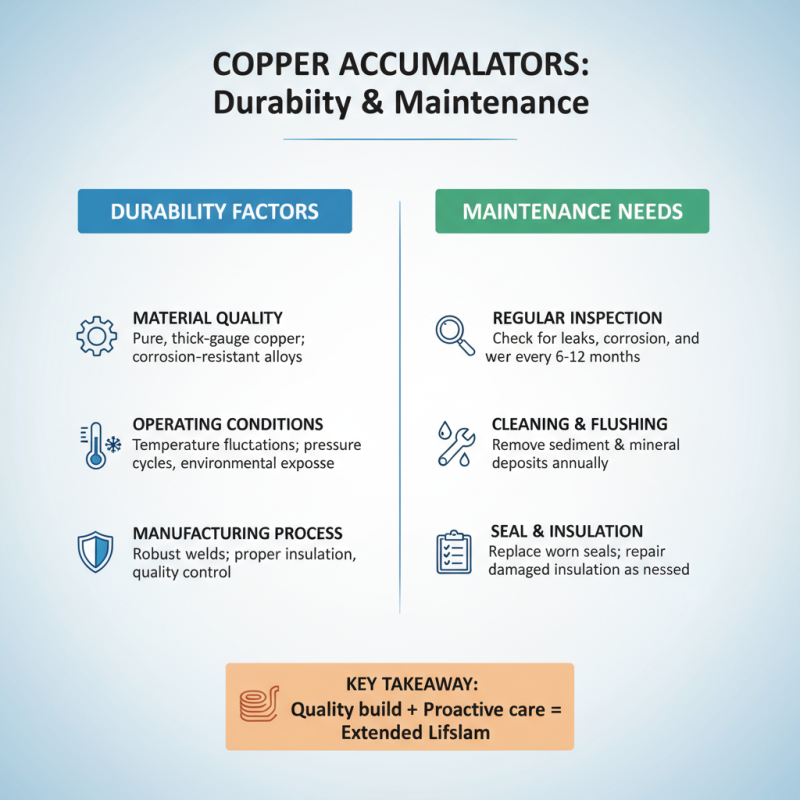
Choosing the right copper accumulator requires careful consideration of its durability and maintenance needs. Copper accumulators are often used in various applications, from HVAC systems to renewable energy storage. Their lifespan can be greatly influenced by the quality of materials used and the conditions they are exposed to.
When evaluating durability, pay attention to the construction quality. A well-constructed copper accumulator will resist corrosion and wear. Look for thickness and reinforcement features, as these can enhance longevity. Regular inspections are crucial. Over time, even the best accumulators may show signs of wear. Checking pressure levels and ensuring seals are intact can prevent larger issues down the line.
Maintenance is another key factor. Copper accumulators typically require less frequent servicing, but this doesn’t mean no servicing is needed. Regular cleaning and inspection are necessary to maintain efficiency. Neglecting these checks could lead to decreased performance or potential failures. It's vital to establish a maintenance routine tailored to your usage conditions. Remember, every operation has unique needs, and a one-size-fits-all approach may not work.
Comparing Cost and Performance of Various Copper Accumulators
When choosing a copper accumulator, cost and performance are critical considerations. The price of copper accumulators can vary significantly. High-quality models may come with a higher initial cost. However, they often provide better efficiency and longer lifespan. Investing wisely can lead to lower overall expenses in the long run. It's essential to balance the budget with performance needs to find the most suitable option.
Performance metrics, such as energy density and charge/discharge cycles, are equally important. A copper accumulator with high energy density can store more energy in a smaller size. This feature is advantageous for space-limited applications. Additionally, the number of cycles it can handle influences how quickly it will degrade. Understanding these specifications helps users make informed decisions.
Not every accumulator suits every application perfectly. Some may perform well under specific conditions but not in others. It’s essential to analyze the particular environments in which the accumulator will be used. Users might find that certain models do not meet their expectations. Reflection on past experiences can guide better choices in the future.