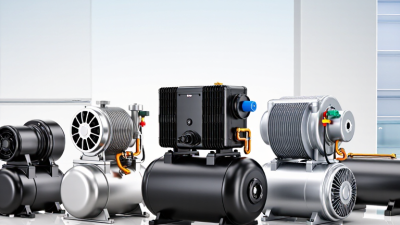
How to Choose a Compressor for Fridge in 2026?
Choosing a Compressor For Fridge in 2026 requires more than matching horsepower to cabinet size. The compressor controls cooling stability, electricity use, noise, and service life. A small domestic refrigerator may need only a fraction of a kilowatt during normal operation, yet poor selection can create long run times, overheating, or uneven temperatures. The details matter.
The International Energy Agency’s The Future of Cooling reports that cooling demand could more than triple globally by 2050 without stronger efficiency measures. Although the report focuses mainly on space cooling, its warning applies to refrigeration design: efficient components will matter increasingly. ENERGY STAR also states that certified refrigerators use at least 10% less energy than models meeting the U.S. federal minimum standard. These figures do not identify one perfect compressor. They show why efficiency should be measured under realistic conditions.
A reliable selection process should compare displacement, refrigerant compatibility, cooling capacity, starting current, COP, sound level, and operating temperature. Inverter compressors can adjust speed as the cabinet load changes. Fixed-speed models may cost less and remain easier to replace. That is not always better. A compact compressor running near its limit may consume more electricity and fail earlier than expected. Check the manufacturer’s performance tables, not only the label. The U.S. Department of Energy, ENERGY STAR, and relevant IEC testing methods provide useful reference points, but local voltage, ambient heat, and service support still influence the final choice. I may be oversimplifying one point: laboratory efficiency cannot fully predict a refrigerator beside a hot stove or opened repeatedly in a busy kitchen.
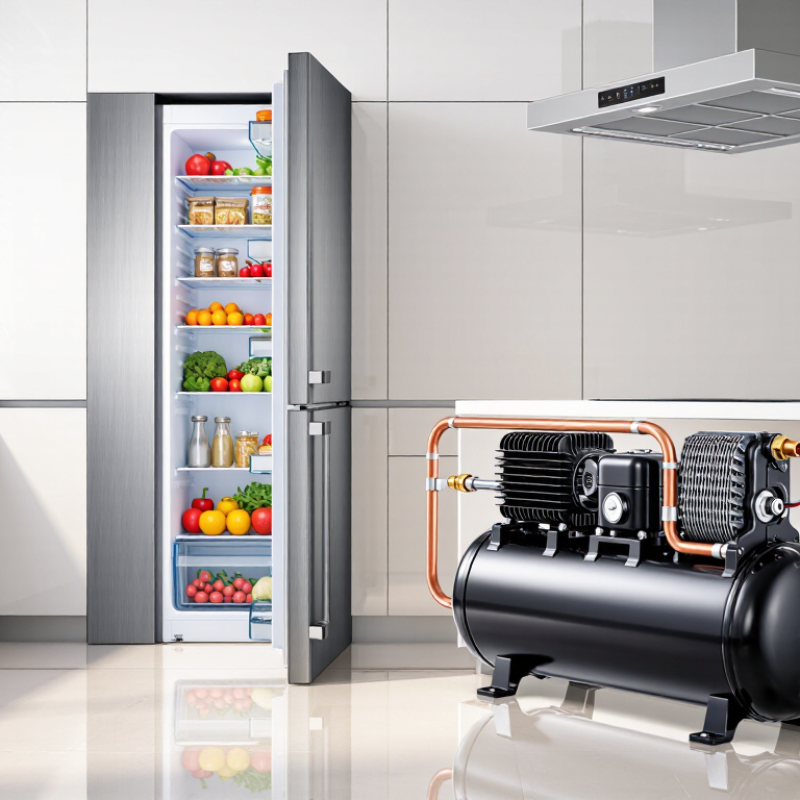
Identify the Refrigerator’s Cooling Requirements
Choosing a Compressor for a Fridge in 2026
Before selecting a compressor, identify the refrigerator’s actual cooling requirements. Cabinet volume matters, but it is only one part of the load. Measure the internal space, target temperature, insulation thickness, door-opening frequency, and expected room temperature. A refrigerator in a warm kitchen needs more cooling capacity than one in a cool storage room.
Watch how the cabinet behaves during normal use. Place a thermometer inside and record temperatures during busy and quiet periods. Note how quickly the temperature rises after the door opens. Fresh-food storage may require a different operating range from frozen storage. Ice buildup, warm shelves, or long running periods can indicate poor insulation, damaged seals, or an undersized cooling system.
I once estimated compressor capacity from cabinet volume alone. That estimate was imperfect. The refrigerator worked, but recovery after loading warm food took too long. A better assessment includes heat entering through walls, door seals, lighting, fans, and stored products. Ambient temperature also affects condenser performance and compressor workload. Select a compressor that can meet the calculated cooling load without running continuously. Check its rated capacity at the intended evaporating and condensing temperatures, not only at a convenient test point. Allow practical margin, but avoid excessive capacity, which may cause short cycling and uneven temperatures. A qualified refrigeration technician can verify these figures with pressure, temperature, and electrical measurements.
Compare Compressor Types and Operating Principles
How to Choose a Compressor for Fridge in 2026?
A refrigerator compressor moves refrigerant through a sealed cooling circuit. Its operating principle affects noise, energy use, durability, and temperature control.
Reciprocating compressors use a piston to compress refrigerant inside a cylinder. They deliver strong starting power and suit many household refrigerators. However, their valves and moving parts can create noticeable vibration.
Rotary compressors compress refrigerant through a rotating mechanism. They are often compact and operate more quietly. Their performance can suffer if installation causes poor oil circulation.
Scroll compressors use two spiral-shaped elements. One spiral moves while the other remains fixed. This creates smooth, continuous compression with fewer pressure pulses. They can provide efficient operation, but their purchase and repair costs may be higher.
Variable-speed compressors adjust motor speed instead of switching fully on and off. This principle supports steadier temperatures and lower cycling losses. It may also reduce noise during light cooling demand. Control quality matters greatly.
Do not choose by efficiency labels alone. Check cooling capacity, cabinet volume, ambient temperature, starting current, and refrigerant compatibility. A compressor that looks efficient in a laboratory may perform differently in a hot kitchen.
Technicians should also inspect mounting springs, airflow, wiring, and oil return. Small details matter.
I would not call one type universally best. My preference can change after measuring noise, recovery time, and energy use in real conditions. The comparison remains imperfect when household door-opening habits are ignored.
Calculate Required Capacity, Voltage, and Energy Use
Choosing a compressor for a fridge in 2026 starts with the cooling load, not the motor wattage. Estimate heat entering through the cabinet, door openings, food load, and room temperature. A small domestic fridge may need roughly 80–180 watts of cooling capacity, but insulation quality changes this figure. Measure real conditions when possible. Guessing is risky.
The compressor must match the required cooling capacity at the intended evaporating and condensing temperatures. Check the data sheet, not only the nameplate. My first estimates often ignored hot summer conditions and frequent door openings. That produced a compressor that looked adequate but ran too long. Allow practical reserve, usually around 15–25%, without choosing an oversized unit. Oversizing can cause short cycling and poor humidity control.
Voltage compatibility is equally important. Confirm rated voltage, frequency, phase, starting current, and allowable voltage variation. A 230-volt compressor is not automatically suitable for every 230-volt supply. Measure the supply under load. For energy use, estimate daily consumption with this formula: input power × running hours × duty cycle. A 120-watt compressor running 10 hours daily uses about 1.2 kWh before control and fan losses. Real duty cycles change with weather. Use a plug-in energy meter for several days, then compare readings with the calculated estimate. Check the relay, overload protector, wiring, and refrigerant requirements with a qualified technician. Small details matter.
Check Refrigerant Compatibility and Installation Constraints
Choosing a refrigerator compressor begins with refrigerant compatibility, not horsepower. Read the cabinet nameplate and service records before comparing models. The refrigerant code, oil type, required charge, and operating pressure must match. A compressor designed for another refrigerant may overheat, leak, or lose cooling capacity. Small mismatch, big trouble.
Use the compressor’s technical datasheet to confirm refrigerant approval, displacement, starting current, and operating limits. Do not rely only on matching voltage. Check whether the system uses a compatible oil and whether its expansion device suits the refrigerant. If conversion is planned, a qualified technician should assess seals, tubing, controls, and charging procedures. Local regulations may require certified refrigerant recovery.
Installation space can reject an otherwise suitable compressor. Measure the mounting pattern, height, pipe positions, service access, and clearance around the motor. Leave room for airflow and vibration isolation. Check that the electrical circuit handles the starting current, especially in a warm kitchen. I once saw a replacement fit the frame but block a service valve, creating needless repair work. That mistake was avoidable.
Review the suction and discharge pipe sizes before ordering. Excessive bending can restrict flow and transmit vibration into the cabinet. Confirm the compressor’s orientation and allowable tilt during transport. A checklist helps, but it is not perfect; field measurements still matter. When uncertain, compare the old unit’s data with verified technical documentation, not a similar-looking photograph.
Evaluate Reliability, Noise, Cost, and Maintenance Needs
How to Choose a Compressor for Fridge in 2026?
When comparing compressors, reliability should come before impressive cooling claims. A sealed compressor with stable operating temperatures usually suffers less stress. IEA’s The Future of Cooling reports that cooling already consumes more than 10% of global electricity. Efficiency affects both bills and system temperature. A slightly higher purchase price may reduce electricity costs over years. Still, efficiency labels are not the whole story. U.S. Department of Energy test procedures use standardized conditions, which may not match a hot, crowded kitchen.
Noise matters. The European Commission’s refrigerator energy-label framework reports airborne noise in dB(A) and assigns classes from A to D. I would prefer a compressor with verified acoustic data, not vague “quiet” wording. Ask for measured sound levels and startup noise. Maintenance is often overlooked. ASHRAE Handbook—Refrigeration stresses correct airflow, refrigerant control, and heat rejection. Choose a design with accessible condenser cleaning, durable fan components, and clear service diagnostics. Check door seals too. They influence compressor workload.
Cost needs a wider lens. Include installation, electricity, replacement parts, and technician time. Cheap units can become expensive after one failed control board. My own judgment can be imperfect. I would request service records or laboratory test evidence before trusting a long-life claim. Also, confirm local voltage and ambient-temperature ratings. A compressor selected for a cool showroom may struggle in a humid utility room.
How to Choose a Compressor for Fridge in 2026?
Comparative evaluation of common refrigerator compressor technologies. Scores are typical industry estimates on a 1–10 scale, where a higher score is better. For noise and cost, a higher score means quieter operation and lower initial cost.
In general, fixed-speed reciprocating compressors are economical and easy to service. Inverter compressors typically offer lower operating noise and better energy efficiency, but they can have higher electronic-control and replacement costs. Linear and rotary designs may reduce noise and vibration, while service availability should be checked before purchase.