2025 How to Choose the Best Compressor for Your Fridge: A Complete Guide
Choosing the right compressor for your fridge is a pivotal decision that impacts not only the appliance's efficiency but also its longevity and the quality of food preservation. According to a report by the International Institute of Refrigeration, approximately 15% of a household's energy consumption can be attributed to refrigeration, highlighting the importance of selecting an energy-efficient compressor. The advancement in compressor technology has led to significant improvements in energy efficiency, with inverter compressors offering up to 30% more efficiency compared to traditional fixed-speed models. This can contribute to substantial savings in energy costs over time, making it crucial for consumers to understand what to look for when selecting a compressor for their fridge.
In the evolving landscape of refrigeration, a well-chosen compressor can enhance performance, reduce environmental impact, and ensure compliance with energy standards. The U.S. Department of Energy estimates that modern refrigerators equipped with high-efficiency compressors consume nearly half the energy of those manufactured just two decades ago. As consumers become more environmentally conscious and budget-aware, choosing the best compressor for your fridge has never been more important. This complete guide will provide insights into the factors that should influence your decision, ensuring you make an informed choice that aligns with both your needs and sustainability goals.
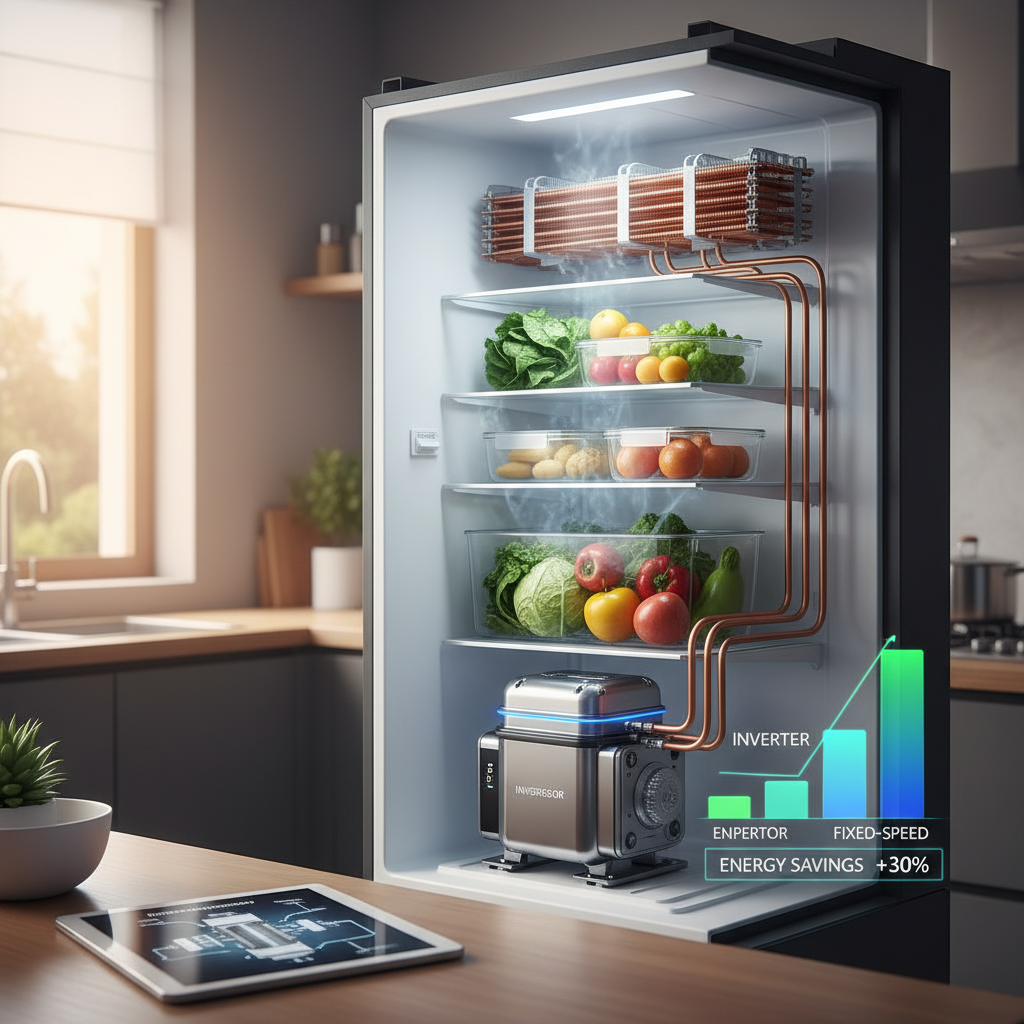
Understanding Different Types of Compressors in Refrigeration Systems
When selecting a compressor for your refrigerator, understanding the different types available is crucial. The most common types of compressors include reciprocating, rotary, and scroll compressors.
Reciprocating compressors operate using a piston mechanism and are known for their efficiency and reliability. They are particularly effective in smaller refrigerators but may be slightly noisier compared to other types.
Rotary compressors, on the other hand, utilize rotating blades to compress the refrigerant. These are favored for their compact size and quiet operation, making them ideal for modern refrigerators designed for minimal sound disruption.
Finally, scroll compressors have gained popularity due to their high efficiency and durability. They feature two spiral elements that compress the refrigerant smoothly, resulting in a quieter performance and lower energy consumption.
Understanding the strengths and weaknesses of each compressor type will guide you in making an informed decision tailored to your refrigeration needs.
Key Performance Metrics: Efficiency Ratings and Energy Consumption
When selecting the best compressor for your fridge, understanding key performance metrics such as efficiency ratings and energy consumption is crucial. According to the U.S. Department of Energy, energy-efficient compressors can reduce energy consumption by up to 30%, significantly lowering electricity bills over time. The efficiency of a compressor is often measured using the Energy Efficiency Ratio (EER) or the Seasonal Energy Efficiency Ratio (SEER). Higher values indicate better performance, which is essential for maintaining optimal temperatures while minimizing energy loss.
Additionally, the refrigerant type plays a pivotal role in energy consumption and environmental impact. A report from the International Institute of Refrigeration states that modern compressors using hydrofluoroolefins (HFOs) can operate with higher efficiency rates while featuring low global warming potential. When evaluating compressors, look for models that meet or exceed energy star ratings and provide documentation backed by laboratory testing to ensure you're making an informed decision that aligns with sustainable practices in refrigeration technology.
2025 Compressor Efficiency Ratings and Energy Consumption
Evaluating Size and Capacity: Matching Compressor Specs to Your Fridge Needs
When selecting the best compressor for your fridge, evaluating size and capacity is crucial.
The compressor's size is directly linked to the cooling efficiency and overall performance of the refrigerator.
Ideally, a compressor should be proportional to the fridge's internal volume. For instance, larger fridges require more powerful compressors to ensure adequate cooling, while smaller models can operate efficiently with less robust options.
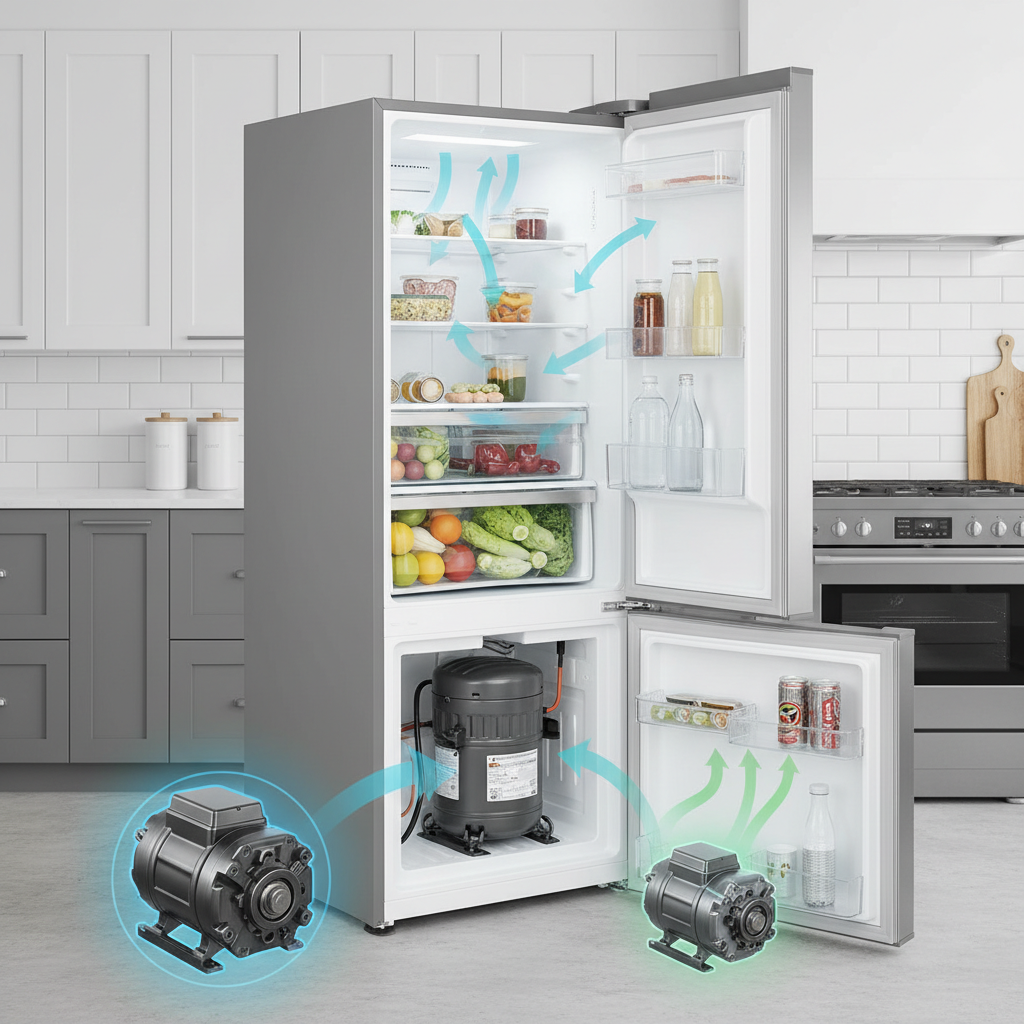
It’s also important to consider the design and layout of your fridge, as these factors can influence how well the compressor can circulate air throughout.
Capacity is another key factor to consider when matching compressor specs to your fridge needs.
Compressors are rated by their cooling capacity, usually measured in BTUs (British Thermal Units).
To determine the right capacity, assess not only the size of your fridge but also how often you open it and the ambient temperature of the area where it is located.
A compressor with a higher BTU rating will manage temperature fluctuations better in environments with significant changes.
Therefore, understanding your fridge's usage pattern will help you choose a compressor that ensures optimal performance and energy efficiency.
Analyzing Noise Levels: Choosing Quiet Compressors for Domestic Use
When selecting a compressor for your fridge, noise level is a crucial factor for many consumers, especially those placing their refrigerators in open living spaces. According to a report by the International Institute of Refrigeration, the average noise level of household refrigerators ranges between 32 to 47 decibels (dB). A compressor operating at the lower end of this scale ensures a quieter environment, making it ideal for homes where peace and quiet are prioritized.
Several manufacturers now offer models specifically designed for low noise operation. For instance, inverter compressors have gained popularity due to their ability to adjust the engine speed based on cooling demands, resulting in reduced operational noise. Studies from the American Society of Heating, Refrigerating and Air-Conditioning Engineers (ASHRAE) have shown that inverter compressors can operate 50% quieter compared to traditional models, often dropping below 38 dB, which is comparable to a library's noise level. This significantly enhances the user experience, allowing for a more comfortable living space while still delivering efficient refrigeration performance.
2025 How to Choose the Best Compressor for Your Fridge: A Complete Guide - Analyzing Noise Levels: Choosing Quiet Compressors for Domestic Use
| Compressor Type |
Noise Level (dB) |
Energy Efficiency Rating |
Warranty (Years) |
Average Price (USD) |
| Reciprocating |
40-50 |
A++ |
5 |
200 |
| Scroll |
35-45 |
A+++ |
7 |
300 |
| Rotary |
38-48 |
A+ |
3 |
150 |
| Inverter |
30-40 |
A++++ |
10 |
400 |
Cost vs. Value: Long-term Savings with Quality Compressors in Refrigerators
When choosing a refrigerator compressor, the balance between cost and value is pivotal for long-term savings. Quality compressors might come with a higher upfront cost, but they often lead to significant savings over time through energy efficiency and durability. An energy-efficient compressor reduces electricity bills while ensuring your food stays fresh longer, which can offset initial investments.
Tips: When evaluating a compressor, look for the Energy Star label, which indicates better energy efficiency. Additionally, consider warranties and service plans; a longer warranty may reflect the manufacturer's confidence in their product's longevity. Understanding the compressor's refrigerant type and its environmental impact can also guide your decision.
Investing in a high-quality compressor can prevent frequent breakdowns and maintenance costs, which often plague cheaper options. Consider exploring brands with a reputation for reliability and customer satisfaction, as these factors can significantly enhance your refrigerator's performance and lifespan.