Leave Your Message

Top 10 Refrigeration Copper Fittings for Global Buyers

Refrigeration Copper Fittings rarely attract attention, yet they influence leak prevention, service life, and system efficiency. Global cooling demand is rising sharply. The International Energy Agency’s The Future of Cooling report projects that cooling energy demand could more than triple by 2050. The United Nations Environment Programme also links cooling growth with refrigerant management and lower-emission technologies. These trends make small components increasingly important. A poorly formed elbow can waste time, refrigerant, and technician labor.

This guide examines ten widely used fitting types for international buyers. The selection considers connection method, pressure suitability, dimensional consistency, corrosion resistance, and installation conditions. Relevant references include ASTM B280 for seamless copper tube used in refrigeration applications, ASME B16.22 for wrought copper and copper-alloy pressure fittings, and EN 1254-1 for capillary fittings. These standards do not replace product-level testing. Buyers should request material certificates, pressure-test records, batch identification, and clear size tables. A polished catalog image is not enough.

Practical experience also matters. A flare fitting may simplify field repairs, while a brazed coupling can support a cleaner permanent joint. A reducing tee must match actual flow requirements, not merely the pipe diameter. Reports from the Copper Development Association emphasize copper’s established role in HVAC and refrigeration systems, but they do not certify every supplier. That distinction is easy to miss. This ranking therefore combines technical references, application evidence, and purchasing risks. It remains imperfect because regional standards, refrigerants, and installer practices vary. Treat the list as a buying framework, then verify each part before shipment and installation.
Top 10 Refrigeration Copper Fittings for Global Buyers

Refrigeration Copper Fittings: Functions, Materials, and Applications

Refrigeration copper fittings connect, redirect, and seal refrigerant circuits. Elbows change flow direction, tees divide lines, and couplings join tube sections. Reducers manage different diameters, while service fittings support evacuation, charging, and maintenance. A small dimensional error can restrict flow or create a costly leak.

Most systems use phosphorus-deoxidized copper, commonly identified as C12200, because it offers ductility, thermal conductivity, and good brazing performance. Fittings must tolerate pressure, temperature cycling, refrigerant oil, and vibration. ASTM B280 remains a widely referenced standard for air-conditioning and refrigeration copper tube. The fitting must match the tube, joining method, and refrigerant system. Guessing is risky.

Applications range from household heat pumps to supermarket cold rooms and transport refrigeration. The International Energy Agency reported in The Future of Cooling that cooling electricity demand could exceed 6,200 TWh annually by 2050, more than triple its 2016 level. The UNEP-led Global Cooling Watch 2023 also estimated that efficient equipment and passive measures could reduce cooling emissions by 68% by 2050. These figures increase pressure on reliable components.

Field experience shows that installation quality often matters as much as material selection. Clean tube ends, correct insertion depth, controlled brazing heat, and nitrogen purging reduce oxidation and leakage. A fitting may look perfect. It can still fail later. Corrosion, poor alignment, or rushed testing are easy to underestimate. Global buyers should request traceable material certificates, dimensional checks, and pressure-test records before shipment.

The Top Ten Fitting Types Used in Refrigeration Systems

Refrigeration copper fittings deserve careful selection, not just low prices. UNEP’s 2023 Cooling Emissions and Policy Synthesis Report projects cooling demand could more than triple by 2050. That growth will increase demand for dependable, repairable connections.

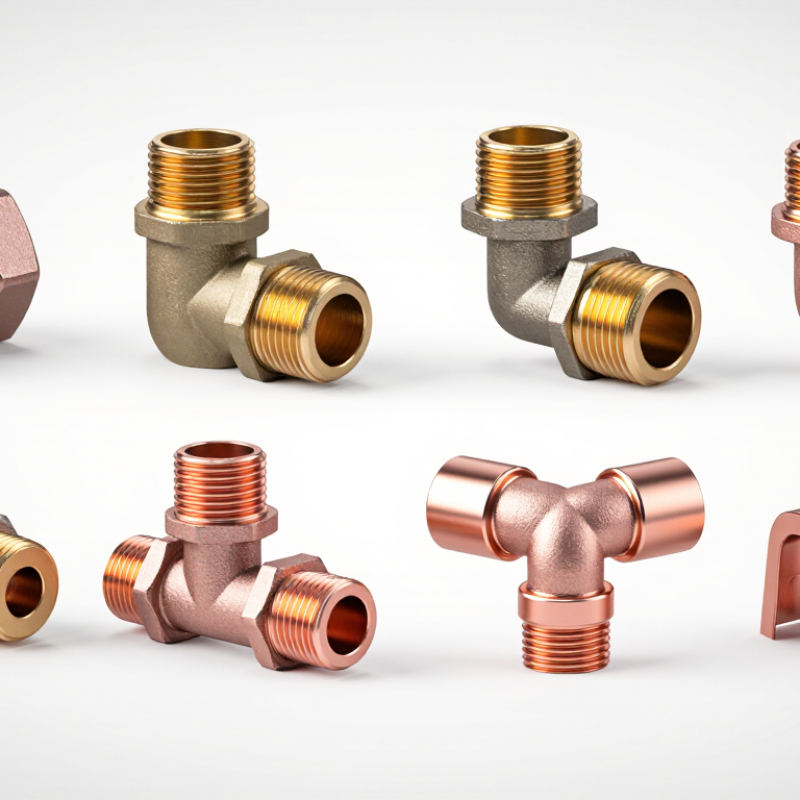
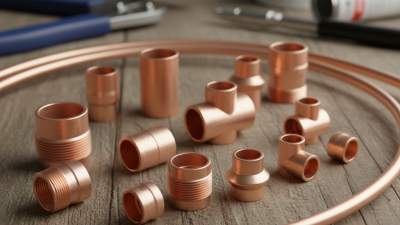
The ten common fitting types are straight couplings, reducing couplings, 90-degree elbows, 45-degree elbows, equal tees, reducing tees, wye branches, unions, caps, and flare adapters. Straight couplings join equal pipe sizes. Reducers connect different diameters. Elbows guide tubing around compressors, coils, and cabinet corners. Tees divide refrigerant flow, while wyes create smoother branches. Unions help technicians remove components during maintenance. Caps close unused lines. Flare adapters support serviceable connections where brazing is impractical.

Small details matter. A 90-degree elbow can save space, but excessive bends may increase pressure loss. The ASHRAE Handbook—Refrigeration emphasizes correct sizing, clean tubing, and suitable joining practices for reliable systems. The U.S. Department of Energy also identifies efficient refrigeration design as important for reducing energy use across commercial facilities. Buyers should verify wall thickness, alloy compatibility, pressure ratings, and refrigerant suitability. Copper does not automatically mean safe. Poorly cleaned joints, trapped moisture, or misaligned tubing can cause leaks later. I have seen specifications favor familiar shapes while ignoring installation access. That is a costly blind spot. Availability matters too, especially for unions, flare adapters, and access fittings used during field repairs.

Top 10 Refrigeration Copper Fittings for Global Buyers - The Top Ten Fitting Types Used in Refrigeration Systems

Selection should be based on refrigerant compatibility, operating pressure, tube size, temperature, and applicable local codes.
No. Fitting Type Primary Function Typical Connection Common Material Typical Applications Key Selection Considerations Typical Installation
1 90° Elbow Changes the refrigerant line direction by 90 degrees. Copper tube × copper tube; commonly solder or braze socket ends. Wrought copper or copper alloy suitable for refrigeration service. Suction, liquid, discharge, and hot-gas piping layouts. Match outside diameter, wall thickness, pressure rating, and refrigerant service. Brazing
2 45° Elbow Provides a gradual 45-degree change in piping direction. Copper tube × copper tube socket connections. Wrought copper or compatible copper alloy. Compact systems where smoother routing and reduced sharp turns are useful. Confirm center-to-end dimensions and clearance around insulation. Brazing
3 Straight Coupling Joins two straight sections of the same-size copper tube. Equal-size copper tube socket ends. Wrought copper, typically supplied clean and internally suitable for refrigeration work. Tube extensions, repairs, coil connections, and line-set assembly. Use a properly sized fitting with full insertion depth and clean, deburred tube ends. Brazing
4 Reducing Coupling Connects two copper tubes with different outside diameters. Large-size socket × small-size socket. Wrought copper or copper alloy approved for the service conditions. Transitions between main lines, branches, coils, and equipment connections. Verify flow direction, tube sizes, pressure drop, and manufacturer requirements. Brazing
5 Equal Tee Creates a branch connection from a main refrigerant line. Three equal-size copper tube socket ends. Wrought copper or compatible copper alloy. Parallel evaporator circuits, distribution headers, and branch piping. Consider branch orientation, oil return, refrigerant distribution, and pressure drop. Brazing
6 Reducing Tee Branches a smaller tube from a larger main line. Two larger socket ends with one smaller branch socket. Wrought copper or copper alloy for pressure-containing piping. Multi-circuit systems, liquid distribution, and suction-line branches. Size the branch for required mass flow and check manufacturer piping guidance. Brazing
7 Reducer Provides a short, concentric or eccentric transition between tube sizes. Large socket × small socket; concentric or eccentric profile. Wrought copper or copper alloy. Equipment nozzles, coil connections, headers, and line-size changes. Eccentric designs may help with drainage or oil management in selected layouts. Brazing
8 Copper End Cap Closes the end of a copper tube or unused branch. Single copper tube socket end. Wrought copper or suitable copper alloy. Temporary line closure, permanent branch termination, and factory-built assemblies. Ensure the cap is rated for the system pressure and does not trap contaminants. Brazing
9 Flare Union or Flare Adapter Connects flared copper tubing to another flare connection or threaded component. 45-degree flare tube end with matching flare nut or male/female thread. Copper or brass body with compatible corrosion-resistant components. Small refrigeration units, serviceable connections, and field-replaceable components. Use the correct flare angle, tube wall, torque, and refrigerant-rated sealing method. Mechanical
10 Brazing Adapter Transitions between a copper tube and a component connection such as a threaded or flanged port. Copper socket end × male/female threaded or flanged connection. Copper tube end with copper alloy or compatible metal connection body. Compressors, valves, filters, receivers, heat exchangers, and service components. Check thread type, port dimensions, gasket or seal requirements, and allowable brazing heat. Brazing

Dimensions, Pressure Ratings, and Connection Methods

Top 10 Refrigeration Copper Fittings for Global Buyers

Refrigeration systems commonly use straight couplings, reducers, elbows, tees, crosses, caps, unions, flare adapters, brazing sockets, and access fittings. Their dimensions usually follow tube outside diameters, from 1/4 inch to 4-1/8 inches, or roughly 6 to 108 millimeters. Metric and imperial sizes are not interchangeable without checking carefully. A 1 mm mismatch can create a weak joint.

Pressure ratings depend on copper grade, wall thickness, temperature, and connection design. Never judge capacity by size alone. Some fittings handle high-pressure refrigerant circuits, while others suit lower-pressure service lines. Verified pressure data should include working pressure, test pressure, and allowable temperature. Standards matter. However, paperwork can be incomplete, so compare certificates with actual markings and supplier specifications.

Connection methods shape installation quality. Brazed joints provide strong, permanent connections when surfaces are clean and heating is controlled. Flare fittings support field service but require correct torque and undamaged sealing surfaces. Compression fittings install quickly, although vibration may demand regular inspection. Press connections save time, yet the tool profile must match the fitting. Small details matter. In practical inspections, poor tube preparation causes more failures than the fitting itself. I have seen neat-looking joints fail after repeated thermal cycling. That detail deserves more attention.

Global Standards, Certifications, and Quality Requirements

Top 10 Refrigeration Copper Fittings for Global Buyers

Global buyers should judge the top ten refrigeration copper fittings against verifiable standards, not polished packaging. ASME B16.22 covers dimensions and pressure requirements for wrought copper fittings. EN 1254-1 supports capillary fitting specifications, while ASTM B280 addresses seamless copper tube used in refrigeration systems. For traceability, request ISO 9001 records and an EN 10204 3.1 material certificate. Check copper grade, wall thickness, ovality, and clean internal surfaces. Small details matter.

The IEA’s The Future of Cooling report projects that cooling energy demand could more than triple by 2050. That growth increases pressure on joint reliability, leak prevention, and refrigerant compatibility. ASHRAE 15 and ISO 5149 provide important safety guidance for refrigeration installations. Fittings should also match the selected refrigerant, operating pressure, temperature range, and joining method. A fitting can look perfect and still fail after brazing.

Ask for batch numbers, pressure-test results, dimensional reports, and documented cleanliness controls. Independent laboratory testing adds confidence, especially for unfamiliar suppliers. Certifications alone are not enough. This is often overlooked. Inspectors should examine burrs, oxidation, package seals, and capped openings before installation. The Kigali Amendment’s HFC phasedown, targeting an 80–85% reduction by the late 2040s, may also change refrigerant choices. Buyers should review compatibility again, because today’s approved fitting may not suit tomorrow’s system.

Selection, Sourcing, and Supplier Evaluation for International Buyers

Top 10 Refrigeration Copper Fittings for Global Buyers

Selection should begin with the system, not the catalog. Common choices include elbows, tees, couplings, reducers, unions, adapters, caps, flare fittings, access fittings, and branch connectors. Match each fitting with the pipe diameter, wall thickness, refrigerant, operating pressure, and temperature range. Copper grade and annealing condition also affect bending and brazing performance. Small details matter.

For international sourcing, request dimensional drawings, material certificates, pressure-test records, and batch traceability. Confirm whether fittings follow recognized standards for refrigeration tubing and connections. Packaging deserves attention too. Plastic caps, dry cartons, and separated sizes help prevent contamination and deformation during ocean transport. Ask about minimum order quantities, production capacity, lead times, and replacement procedures. Do not rely on photographs alone.

Supplier evaluation should combine documents with physical checks. Review sample surfaces for cracks, oval ends, burrs, and uneven wall thickness. A reliable supplier should explain inspection points clearly and provide consistent reports. Factory audits can examine calibration records, brazing guidance, storage conditions, and worker training. I still see buyers overvalue polished catalogs. That shortcut fails. Low prices may hide inconsistent dimensions or weak packaging. However, even a careful audit cannot predict every shipment problem. Keep approved samples, define acceptance limits, and record nonconformities before signing long-term agreements.